Global Compliance Services
e-Invoicing and e-Transport
Master the technical and legal standards of your target markets with our comprehensive overview.

What does it mean to be legally compliant with Comarch services?”
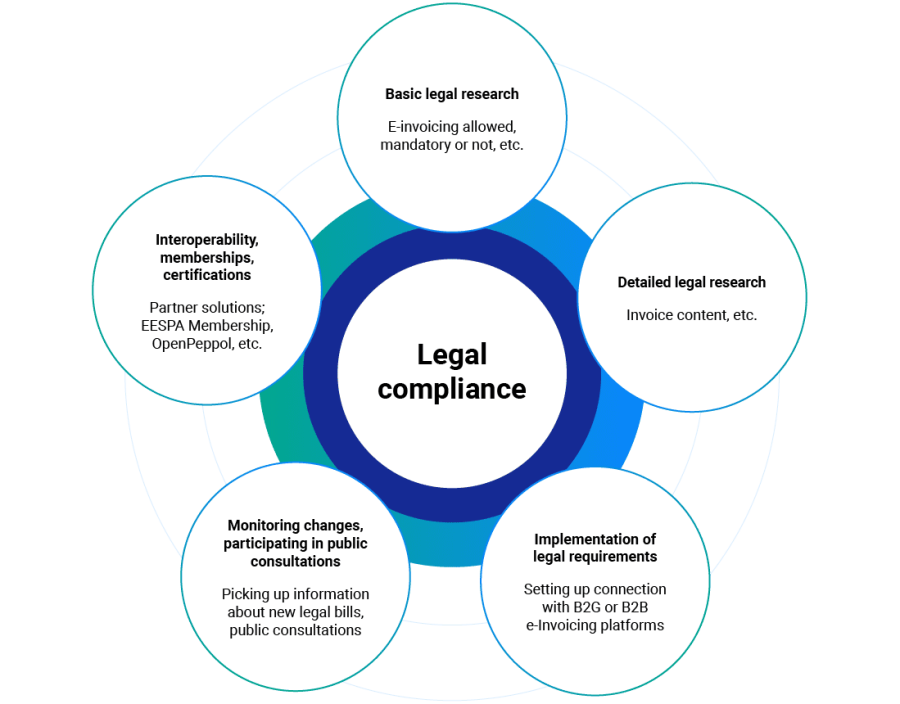
Being legally compliant in practice means that the supplier or buyer comply with official regulations in a specific country when sending and receiving e-invoices in following areas:
- Authenticity of origin - ensuring that the sender and recipient of a document are authentic, that the document was in fact sent by the stated sender and received by the intended recipient
- Integrity of content - ensuring that the contents of documents are never altered once they have been issued
- Readability - electronic invoices must be human readable from issuance through the entire retention period
- Storage - ensuring storage in a secure manner, with a guarantee of integrity and an audit trail. Must be later accessible for any reason (e.g. tax audits)
E-Invoicing Journey – selected legal compliance changes
Check where the mandate is going to be introduced in the nearest future.
 2025
2025- January
 Romania
E-reporting B2C for all suppliers. Romania and end of e-transport grace period. Read more
 Latvia
Mandate for G2G and G2B relations. Read more
 Germany
Mandatory B2B e-invoicing, capable of receiving e-invoices (phased roll-out). Read more
 Malaysia
E-invoicing regime introduction for taxpayers with turnover > MYR 25 million. Read more
 Israel
The e-invoicing mandate for all invoices with a value of over NIS 20,000. Read more
- March
 Bolivia
An obligation for group 10,11 to start issuing electronic tax documents. Read more
- April
 Jordan
Implementation of e-invoicing (phase 2). Read more
- July
- Malaysia
Mandatory B2B/B2G e-invoicing annual turnover > MYR 500,000 and up to MYR 25 million. Read more
- Romania
End of grace period for noncompliance. Read more
 Estonia
Right to request structured e-invoices from suppliers (AR). Read more
 Hungary
Mandatory e-invoicing for the electricity and natural gas sectors. Read more
- October
 France
Start of a PDP pilot (phase 1). Read more
- December
 Nigeria
End of a pilot with major companies. Read more
-
2026
- January
- Malaysia
Mandatory B2B/B2G e-invoicing annual turnover > MYR 150,000. Read more
- Israel
The e-invoicing mandate for all invoices with a value of over NIS 10,000. Read more
 Belgium
B2B e-invoicing mandate based on PEPPOL. Read more
 Croatia
B2B e-invoicing mandate for VAT-registered businesses and freelancers. Read more
 Denmark
Entry into force of the requirement for Class A (digital accounting system). Read more
 Spain
SpainMandatory the implementation of Veri*Factu standards for billing software for all enterprises. Read more
- February
 Poland
Poland – B2B/B2G mandatory e-invoicing (wave 1). Read more
- May
 Dominican Republic
An obligation for all taxpayers in B2B,B2G relations. Read more
- June
- Israel
The e-invoicing mandate for all invoices with a value of over NIS 5,000. Read more
- July
 United Arab Emirates
E-invoicing mandatory for all transactions. Read more
- August
 Oman
OmanFirst wave with 100 largest taxpayers, plus voluntary registrations.
- September
- France
Obligation to issue e-invoices for large and medium enterprises. All entities regardless of their size shall be able to receive the electronic invoices. Read more
-
2027
- January
- Germany
Mandatory e-invoice issuing for companies with annual revenues exceeding EUR 800,000 (phase 2). Read more
 Portugal
Introduce mandatory SAF-T Accounting from 2027 (covering 2026). Read more
- Poland
Mandate for “digitally excluded” taxpayers, with a single transaction up to PLN 450 for an invoice and up to PLN 10,000 per month for a total sales value. Read more
- United Arab Emirates
E-invoicing mandatory for businesses with rev >50,000,000AED. Read more
 Philippines
Mandatory e-invoicing for e-commerce companies and for all large taxpayers. Read more
- Oman
Second wave other largest B2B taxpayers.
- September
- France
B2B mandatory e-invoicing/e-reporting for small companies. Read more
- Throughout
- Spain
Probable date of entry into force of mandatory electronic invoicing mandate. Read more
- Estonia
Long-term assumptions for e-invoicing to be mandatory for B2B (AR). Read more
 Slovakia
B2B e-invoicing mandate for domestic transactions. Read more
- Denmark
Phasing out of the OIOUBL format. Read more
 Singapore
Potential Countrywide B2B e-Invoicing mandate. Read more
-
2028
- January
- Germany
B2B e-invoicing for all taxpayers. Read more
 United Kingdom
Test and pilot phase (potential). Read more
- Belgium
The Belgian government introduces a mandatory near-real-time e-reporting system for tax purposes. Read more
 Finland
The government plans to start preparations for the introduction of electronic invoicing for intra-EU transactions. Read more
- Latvia
B2B e-invoicing mandate based on PEPPOL. Read more
 Slovenia
B2B e-invoice reporting mandate. Read more
- August
- Oman
B2G Obligation. Read more
- November
 Ireland
eINV mandate for large b. Read more
- Throughout
- Hungary
5-corner PEPPOL model possible introduction date. Read more
 Bahrain
Possible e-Invoicing system introduction. Read more
-
2029
- Throughout
 Netherlands
Planned e-Invoicing and e-Reporting obligation. Read more
- July
 EU
EUE-invoicing becomes the norm for all B2G and B2B transactions (expected).
- EU
DDR for intra-community transactions (expected).


Achieve Global e-Invoicing Compliance with Comarch
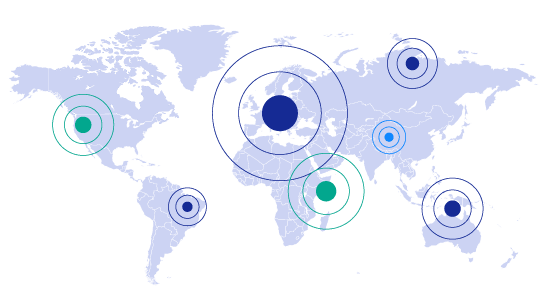

Industry associations
Best practices based on collaboration with industry organizations and government agencies on a global scale









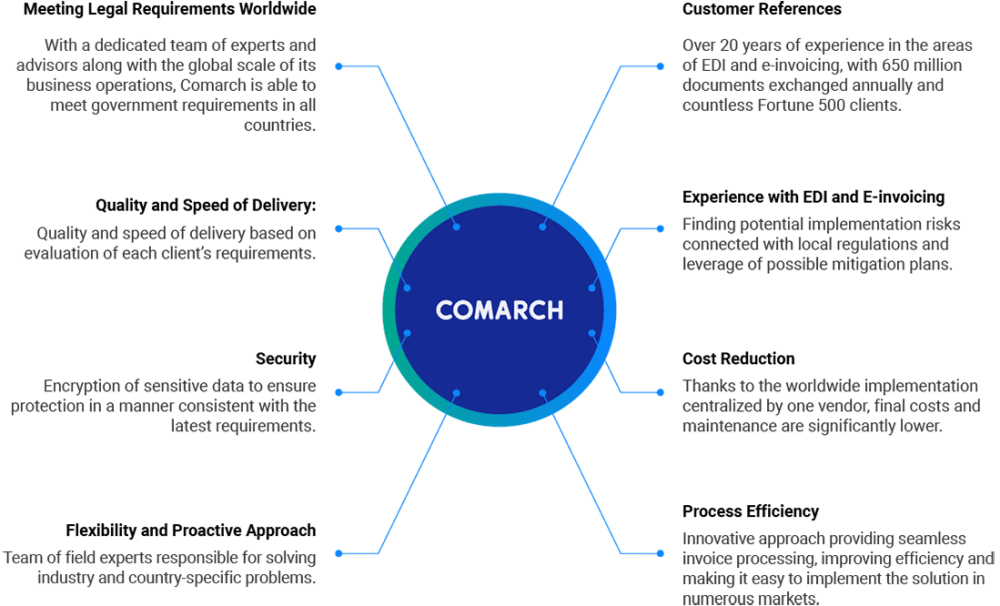
How Comarch can help with global compliance?
-
Spain Targets October 2026 for B2B E-Invoicing Technical Rules
Spain is moving closer to mandatory B2B e-invoicing, with its tax authority, AEAT, targeting October 1, 2026, as the date on which the Ministerial Order governing the technical rules of the Public Electronic Invoicing Solution is intended to take effect.
-
San Marino Introduces Mandatory Domestic E-Invoicing
San Marino has expanded its e-invoicing regime to cover domestic transactions between Sammarinese operators, with mandatory compliance beginning January 1, 2027.
-
Netherlands Confirms Mandatory E-Invoicing and Digital VAT Reporting Timeline
On September 11, 2026, the Dutch government confirmed it will introduce mandatory e-invoicing and digital transaction reporting for B2B transactions. The initiative stems from the EU’s VAT in the Digital Age reforms.



-
Unilever
The implementation of electronic data interchange at Unilever -
Leroy Merlin
Comarch Document Management and Exchange Platform for Leroy Merlin -
Agfa
Implementation of Comarch e-Invoicing at Agfa-Gevaert Group -
BIC
Comarch EDI Complex Services for BIC -
Lidl
Comarch e-Invoicing at Lidl -
METRO Digital
Comarch EDI at METRO Digital -
Danone
Benefits of implementing Comarch Electronic Data Interchange -
Kraft Heinz
Comarch Master Data Management (MDM) Project -
ObjetRama
Comarch EDI at ObjetRama -
Volotea
Digitize Billing Processes With Comarch E-Invoicing -
Technicolor
Implementation of Comarch EDI at Technicolor -
Carrefour Poland
Comarch EDI at Carrefour Poland -
Red Bull
Red Bull actively develops business processes by using modern Comarch solutions -
Colgate-Palmolive
Online Distribution and Mobile Sales Force for Colgate-Palmolive -
Balconi
Implementation of Comarch EDI at Balconi -
La Redoute
Implementation of Comarch EDI at La Redoute -
Italcementi
Italcementi and Comarch: Improving business efficiency by digitizing invoicing processes -
Bolsius
Implementation of Comarch EDI solution for Bolsius -
Belmond Group
Belmond Group Chooses Comarch to Update its E-invoicing and E-archiving Systems -
Angelini Holding
Angelini Holding S.p.A Chooses Comarch EDI Platform for its Foreign Branches -
Sammontana
Sammontana Chooses Comarch Master Data Management -
BayWa
BayWa Implements Comarch EDI to Meet the Upcoming B2G E-invoicing Obligation -
Ursus Breweries
Comarch E-invoicing Helps Ursus Breweries Meet New Legal Requirements in Romania -
Heidelberg Materials
Global Digitization with Comarch EDI at Heidelberg Materials -
Monini
Monini chooses Comarch’s EDI platform -
Mutti
chooses Comarch EDI for multi-country data processes -
De Cecco
Comarch EDI at De Cecco -
La Doria
Processes of Electronic Data Interchange in E-commerce